
Colorado Medical Power of Attorney: Choosing a Health-Care Agent
A Colorado medical durable power of attorney lets you name a trusted person—your health-care agent—to make health-care decisions when you lack decisional capacity. The document can define the agent’s authority, give instructions, and place limits on what the agent may do.
This is an estate-planning document, not a transfer of control over your everyday medical choices. While you can make and communicate your own decisions, you continue to direct your care.
Why planning ahead matters
If you have not appointed an agent and later lack decisional capacity, Colorado law provides a process for interested people to select a proxy decision-maker. A spouse, child, or other relative does not automatically receive that authority. Naming your own agent lets you decide in advance who should speak for you and can reduce uncertainty for the people involved in your care.
When can the agent act?
The authority generally matters when you lack decisional capacity. The exact trigger, decision-maker, instructions, and limits should be clear in the document.
What can the document address?
- Consent to or refusal of proposed care
- Selection of providers or facilities
- Access to relevant medical records
- Instructions, conditions, and limits on authority
What must the agent follow?
The agent must follow the document and your known wishes. If neither resolves a decision, the agent must act according to what the agent determines is in your best interests.
What remains outside the document?
Medical standards, provider duties, facility rules, and other Colorado law still apply. A medical power of attorney cannot compel treatment that is illegal or medically inappropriate.
Choosing the right health-care agent
The best choice is usually an adult who understands your values, can communicate calmly with clinicians and family, and is willing to make difficult decisions. Geography, availability, family dynamics, and the ability to obtain records may matter. Naming a successor agent can help if your first choice cannot serve.
Talk with the people you plan to name before signing. Give them an opportunity to ask questions and make sure they know where the signed document can be found. Your attorney can help tailor the appointment, instructions, and successor provisions to your circumstances.
Want help choosing an agent and putting your wishes in writing? Schedule an estate-planning consultation.
Medical power of attorney vs. living will
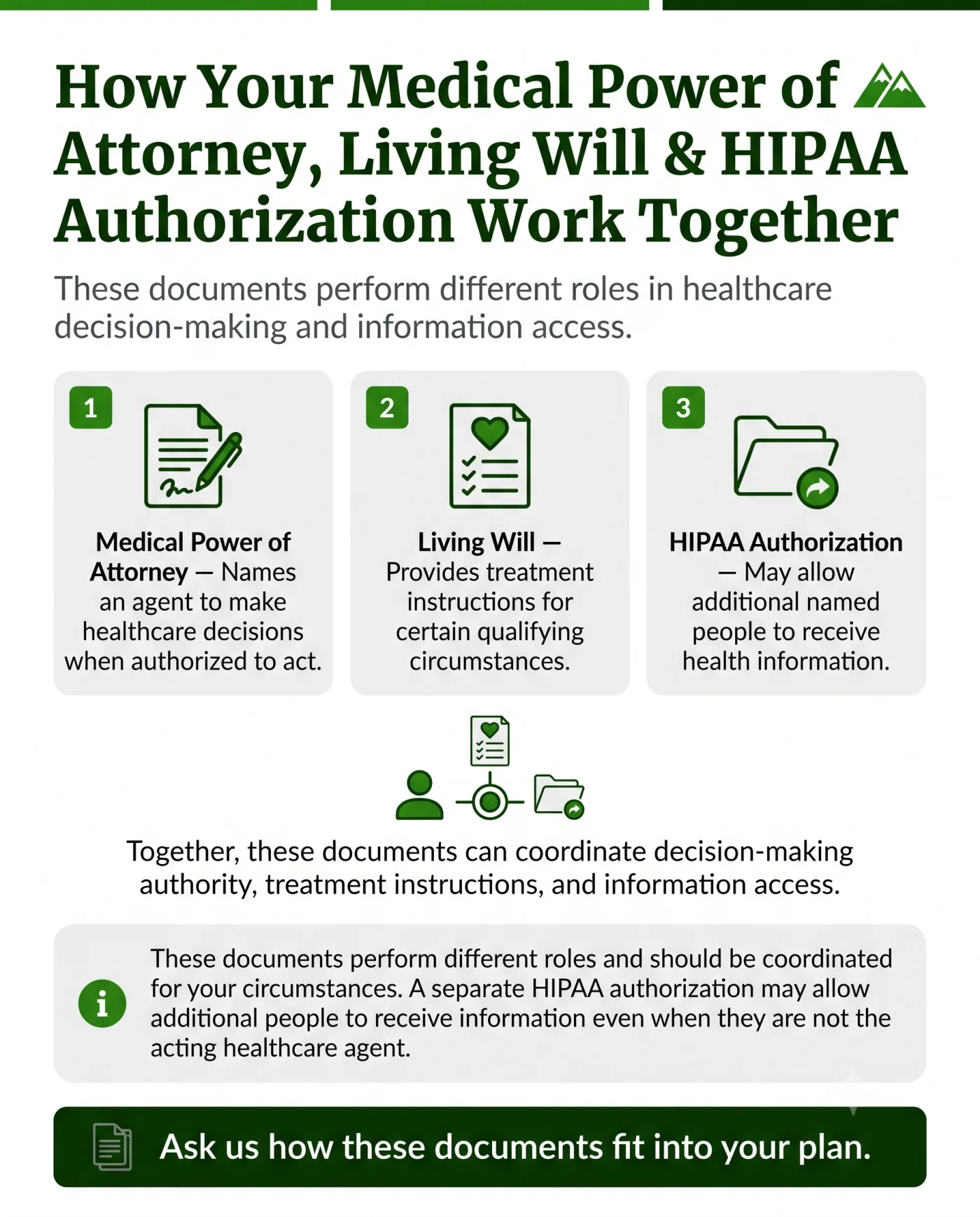
A medical power of attorney names a person to make health-care decisions within the authority you grant. A Colorado living will—also called a declaration concerning medical or surgical treatment—states certain treatment directions for qualifying circumstances. One document does not automatically replace the other, and coordinated documents can reduce uncertainty.
Learn more about Colorado living wills. For authority over money and property, see our separate guide to a Colorado financial power of attorney.
Frequently asked questions
What happens if I do not name a health-care agent?
Colorado has a process for selecting a proxy decision-maker when an adult patient lacks decisional capacity and has not appointed an agent. Family members and other interested people may need to reach a consensus about who should serve. No spouse, child, or other relative automatically receives that authority. Naming your own agent lets you make that choice in advance.
Does a Colorado medical power of attorney need witnesses or notarization?
Colorado’s medical durable-power-of-attorney statute does not require witnesses or notarization. A living will is a different document and has separate execution requirements. Your attorney can advise whether additional formalities would be useful for your circumstances or anticipated use outside Colorado.
When may my health-care agent make decisions?
An appointed agent may make medical-treatment decisions when you lack decisional capacity, subject to the authority, instructions, conditions, and limits in your document. Your agent must follow your known wishes and cannot override your objection to treatment.
Can I revoke my health-care agent’s authority?
Yes. Colorado law preserves your right to revoke the agent’s authority. After making a change, notify the agent and relevant health-care providers and replace outdated copies so that your current wishes are clear.
Does a medical power of attorney replace a living will?
No. A medical power of attorney names the person authorized to make decisions. A living will records certain treatment directions for qualifying circumstances. Coordinating the documents can reduce uncertainty or conflict.
Does my spouse automatically make medical decisions for me?
No. Colorado does not automatically give a spouse—or another relative—medical decision-making authority. A written medical power of attorney is the clearest way to identify the person you want to serve.
Creating or updating your Colorado medical power of attorney
A useful planning process includes identifying your goals, choosing an agent and successor, deciding whether the document needs special instructions or limits, coordinating it with your living will and other advance directives, signing it correctly, and giving accessible copies to the people who may need them.
Review the plan after a major health change, relationship change, move, or change in your chosen agent. While you have capacity, you retain the right to revoke the appointment and to consent to or refuse treatment.
How our estate-planning practice can help
The Law Office of Clark Daniel Dray provides Colorado estate-planning advice. We can help you decide how a medical power of attorney should fit with your will, financial power of attorney, living will, and broader estate plan. We do not provide medical advice or represent health-care providers.
Discuss your Colorado estate plan
If you want a medical power of attorney tailored to your goals and coordinated with your other planning documents, schedule a consultation to discuss your options before a medical crisis makes the decision more difficult.
Official legal sources: Colorado Revised Statutes §§ 15-14-506 through 15-14-509 and § 15-18.5-103. Legal sources reviewed July 23, 2026. This page provides general information, not medical or legal advice, and the best document language depends on individual circumstances.